

Farming really comes down to finding balance. You want to protect your crops, keep your animals safe, and make sure nothing goes where it shouldn’t. Sounds easy enough, but as soon as animals start wandering or you lose track of your boundaries, things go off the rails pretty quickly.
That’s why wire fencing matters so much. It’s not just about drawing a line around your farm—it’s about keeping things organized and secure, making chores easier, and honestly, just giving you one less thing to worry about. Whether you’re dealing with cattle, crops, or a little of everything, the right fence quietly takes care of problems before you even notice them. Let’s walk through how to pick the setup that actually fits your land.
Fencing might seem basic, but don’t underestimate it. It keeps your animals where they belong, stops predators from sneaking in, and marks your property so everyone knows what’s yours. When a fence does its job, you don’t even think about it after it’s up—and that’s exactly how it should be.
Wire fencing’s been around for ages, and it’s stuck around for a reason. It’s tough but flexible, and it works just about anywhere. Here’s why folks keep choosing it:
Nothing fancy, just solid, reliable utility.
Sure, these days there are all kinds of high-tech fencing—electric wires, composite materials, even stuff that can send alerts to your phone. Still, for most farms, wire fencing is the backbone.
Suggested Reading: Farm Theft Prevention: Keep Tractors & Tools Safe at Night
Before you buy, it’s smart to figure out what kind of wire fencing actually fits your situation. Each type solves a different problem. Picking the wrong one turns into a headache. Here’s the gist:
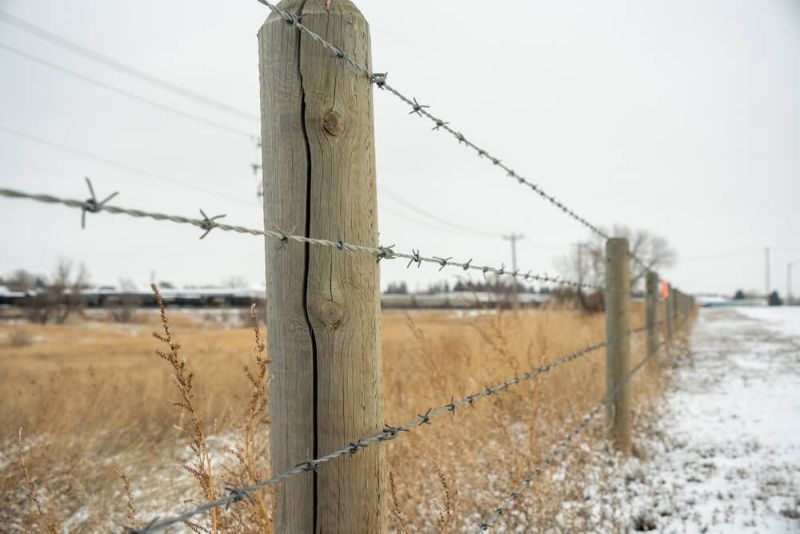
Barbed wire is classic for cattle. Those little barbs don’t just physically keep animals in—they teach them to respect the fence after a run-in or two.
Woven wire makes a tight mesh, so it’s way better for smaller animals that like to test fences or squeeze through gaps.
Electric fencing changes the game. It doesn’t need to be super sturdy; it just needs to deliver a little jolt when animals get too close.
High tensile is all about strength and lasting power. The tightly stretched wires don’t sag and stand up to lots of pressure.
Not all fences are the same, and what your neighbor uses might be totally wrong for your setup.
Always think of the animals first. Their size, habits, and personalities all matter.
Don’t overlook your land’s shape or the weather. Flat ground is a breeze to fence. Slopes or hills? You’ll want something flexible, like woven or high-tensile wire. Heavy snow or strong winds? Choose fences that won’t buckle—or go for materials that resist rust if it’s wet and humid.
The cheapest option up front is tempting, but think it through. Cheap fences break or sag faster, and you’ll spend more fixing them. You’re better off spending a little more for something sturdy that saves work down the road.
Don't Miss: Farm Equipment Protection Steps to Keep Tools Safe
You don’t have to stick with one type of fencing across your entire property. In fact, combining different systems often produces better results. Here’s where a bit of planning pays off.
There’s no rule that says you need the same fence everywhere. Mixing things up—barbed for boundaries, woven for smaller animals, electric for trouble spots—usually works better. It gives you flexibility and lets you adapt as your farm changes.
Moving animals from pasture to pasture helps the land recover and makes your grass last longer. Fencing off smaller sections lets you control where the animals go, and the right fence makes it easy to rotate safely and efficiently.
Fencing isn’t only about containment. It’s about protecting everyone—your animals, your investment, your peace of mind. Small details count here.
Barbed wire can scrape up animals if they push too hard, but floppy fences just let them out. Fix loose wires, keep everything tight, and make sure fences are easy for animals to see—especially for flighty ones like horses.
Coyotes, foxes, even neighborhood dogs—fencing has to keep these guys out, too. Close that bottom gap, add electric strands if needed, and check gates so nothing sneaks in after dark. You don’t need a fortress—just make it tough enough that predators don’t bother.
Also Read: Farm Building Storm Safety: Prepare Now for Tornado Season
A good fence does more than split up your field. It protects your animals, simplifies daily chores, and brings a little more order to the chaos of farm life. Wire fencing still wins out because it’s strong, adaptable, and affordable. The trick is to match your fence to your land, your animals, and your long-term plans.
Try to get posts one-third of their length underground. So, an 8-foot post should go about 2 to 3 feet deep. Hard or rocky ground might need a little less, softer ground, maybe a little more.
Yes, many farmers install wire fencing themselves using basic tools. However, larger or more complex setups, especially high-tensile systems, may require specialized equipment and experience for proper tension and alignment.
There’s no fixed timeline. Well-maintained wire fencing can last 15 to 25 years or more. Regular repairs and proper installation play a big role in extending its lifespan.
Depends on what you’re keeping in. Cattle fences run about 4–5 feet. Sheep a little lower but with a tighter mesh. Horses need something taller and easy to spot so they don’t jump or get spooked.
This content was created by AI